Single Motherhood: Between Resistance and Hope
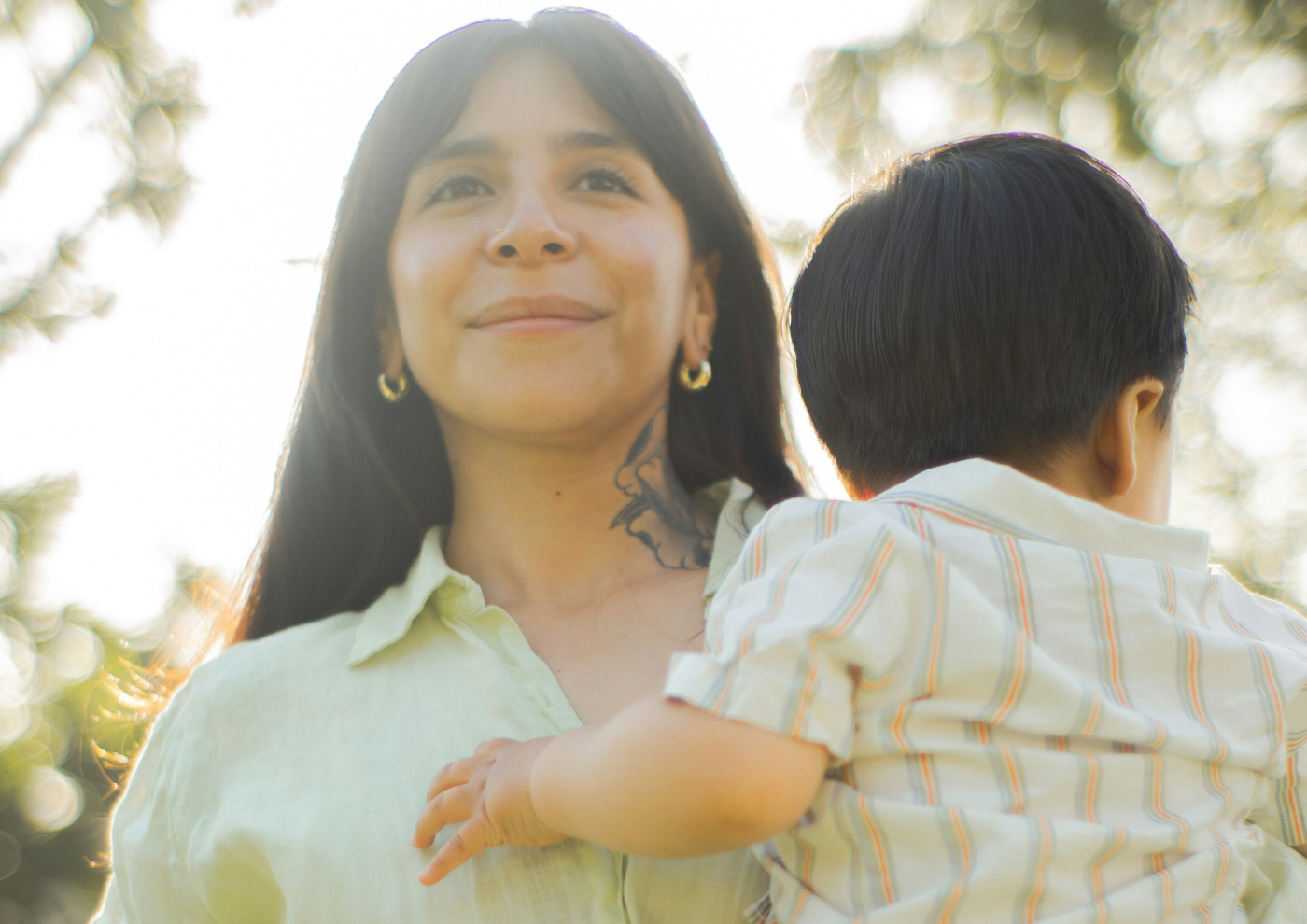

There are forms of violence that make no noise. They leave no visible bruises and do not occupy headlines every day. Yet they silently inhabit millions of homes. One of them is paternal abandonment and the disproportionate burden that millions of women face when raising their children alone.
In Mexico and much of Latin America, one in four families is headed by a single mother. This immense and growing number of women sustains a significant portion of social life. They work double or triple shifts, educate, provide emotional support, manage scarcity, navigate bureaucracies, contain their children's pain, and often survive in a system that still considers it "natural" for a woman to bear alone the weight of child-rearing.
Behind each single mother lies a different story. Some found themselves alone through abandonment, others through violence, separation, widowhood, or difficult decisions. But many share something in common: the profound exhaustion of sustaining what should be a shared responsibility.
For years I have worked with mothers in this situation. I have also lived this experience firsthand. And if I have learned anything, it is that single motherhood can no longer be viewed through fleeting compassion or stereotype. It must be understood as a social reality that demands justice ,recognition, and serious public policy.
Because we are not speaking solely of economics. We are speaking of human rights.
In Mexico, eight out of ten children of separated parents do not receive child support. This figure represents far more than missing money. It represents uncertainty, anxiety, emotional overload, and lost opportunities. The failure to pay child support is a form of economic violence that strikes directly at women and children.
Many mothers live in a permanent state of exhaustion. They work outside the home and then continue another invisible shift within it. They attempt to be providers, caregivers, teachers, nurses, and emotional refuge all at once. Meanwhile, thousands of children grow up with difficult questions: Why did Dad disappear? Why doesn't he call? Why doesn't he follow through? Why don't I matter to him? Why does love seem so fragile?
Psychologist Raquel Schlosser describes this reality as a form of "continuous trauma"—a prolonged experience of stress, insecurity, and abandonment that leaves deep emotional marks on both mothers and children. It is not merely an economic absence. It is the rupture of a system of affective and material protection that should sustain childhood.
The consequences are visible across multiple dimensions: poor academic performance, anxiety, feelings of rejection, self-esteem problems, and vulnerability to various forms of violence. Nevertheless, society continues to minimize the problem. We continue to hear phrases that blame women for "having chosen poorly" or that romanticize the idea that "a mother can handle everything alone."
No. She should not have to do it alone.
Motherhood can no longer rest on the extreme sacrifice of millions of women. Society needs to understand that caregiving is also labor. That raising emotionally healthy citizens is a fundamental social task. And that paternal abandonment is not a private matter: it is a structural problem that impacts the development of an entire country.
For this reason, advances such as the National Registry of Child Support Obligations (RNOA), created to centralize information about child support debtors and protect the rights of children and adolescents, have been so important. The creation of laws such as the so-called "3 of 3 Against Violence" represents a profound cultural shift: beginning to understand that someone who economically abandons their children cannot be considered an exemplary citizen to hold public office or represent society.
But laws, while indispensable, are not enough.
A cultural transformation is also necessary.
We need to stop normalizing paternal irresponsibility. We need more efficient judicial systems, stronger community networks, and care policies that allow women to not live permanently on the edge of physical and emotional exhaustion.
And, above all, we need to regard single mothers with dignity and not with pity.
Because if there is one thing I have witnessed over the years, it is extraordinary strength. I have seen women capable of rebuilding their lives from the ruins. Mothers who study at night after working all day. Women who transform fear into drive. Children who, even amid absence, manage to grow surrounded by love thanks to the immense dedication of a mother.
Being a single mother is not an identity of defeat. It is often a painful experience, yes. But it can also become a space of enormous resilience ,awareness, and transformation.
There are mothers who sustain entire households with a quiet dignity that is rarely recognized. Women who continue to believe in the future even when the present seems unjust. Women who did not have time to break because there were children waiting for breakfast, homework help, clean uniforms, or a hug before bed.
We owe them far more than tributes one day a year.
We owe them conditions of justice.
We owe them respect.
We owe them real public policies.
And we owe them a much more honest social conversation about masculine co-responsibility, childhood, and care.
Because a country that abandons its mothers also abandons its future.
But a country that accompanies them, protects them, and recognizes them, also begins to heal.
And perhaps there, precisely there, hope begins.